
Restaurant stir-fry beef is silky and tender; home stir-fry beef is too often grey and chewy. The difference isn’t the cut — it’s a ten-minute trick called velveting, and once you know it you’ll never go back. This is a fast, glossy ginger-garlic version that turns whatever’s in the veg drawer into dinner.
Who it’s for: anyone who’s given up on cooking their own stir-fry because the beef always comes out tough, and anyone who wants a genuinely quick weeknight dinner that flexes around whatever’s in the fridge.
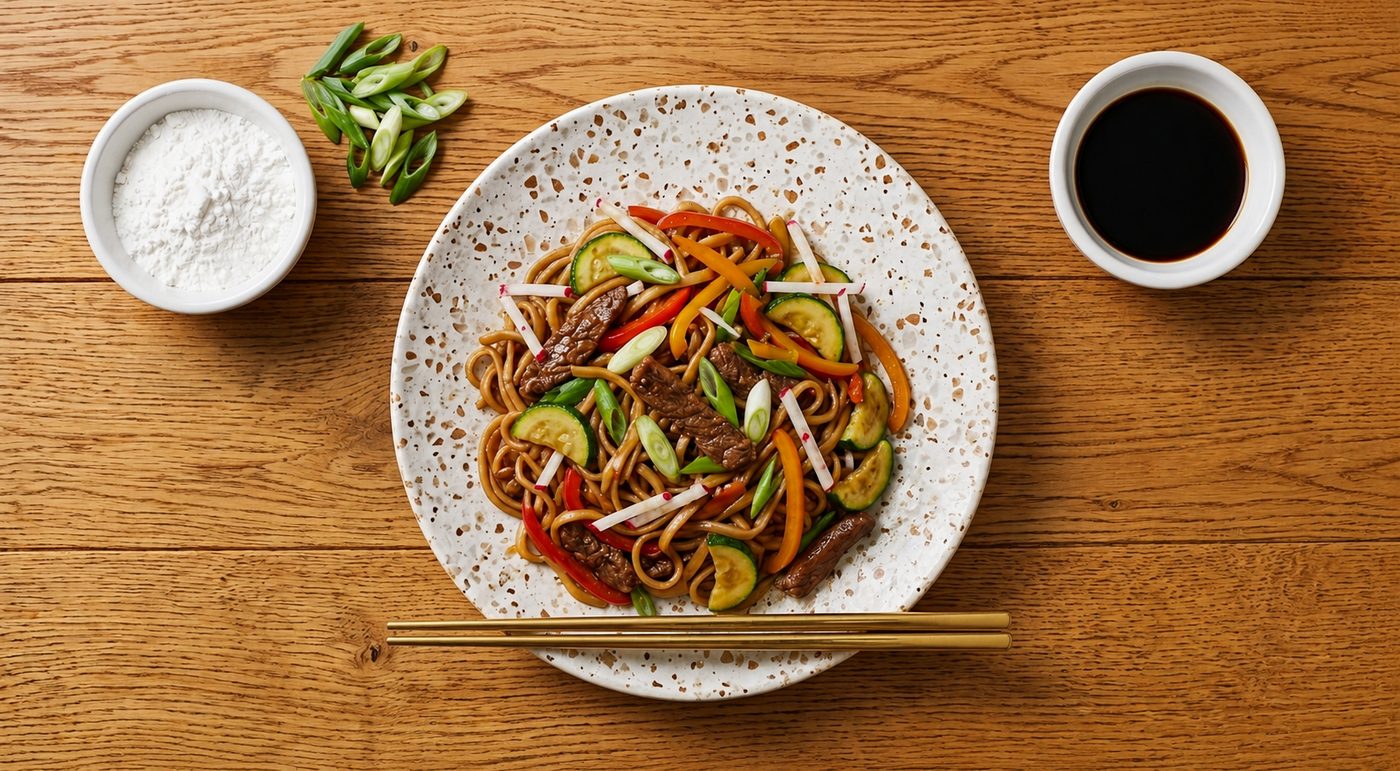
- 400 g beef strips, sliced across the grain
- 1 tbsp potato starch (or cornflour / arrowroot)
- 1 tbsp soy sauce or tamari
- 1 tsp sesame or olive oil
- ½ tsp bicarb soda (optional — the tenderiser)
- 2 carrots, thin diagonal slices
- 1 zucchini, half-moons
- 4–5 radishes, thinly sliced
- Sauce: 2 tbsp soy/tamari, 1 tbsp water, 1 tsp sesame oil, 1 tsp grated ginger, 1 small garlic clove (grated), 1 tsp rice vinegar or lemon, ½ tsp potato starch, ½–1 tsp maple (optional)
- To finish: squeeze of lemon, drizzle of sesame oil, sesame seeds
- Steamed rice or rice noodles, to serve
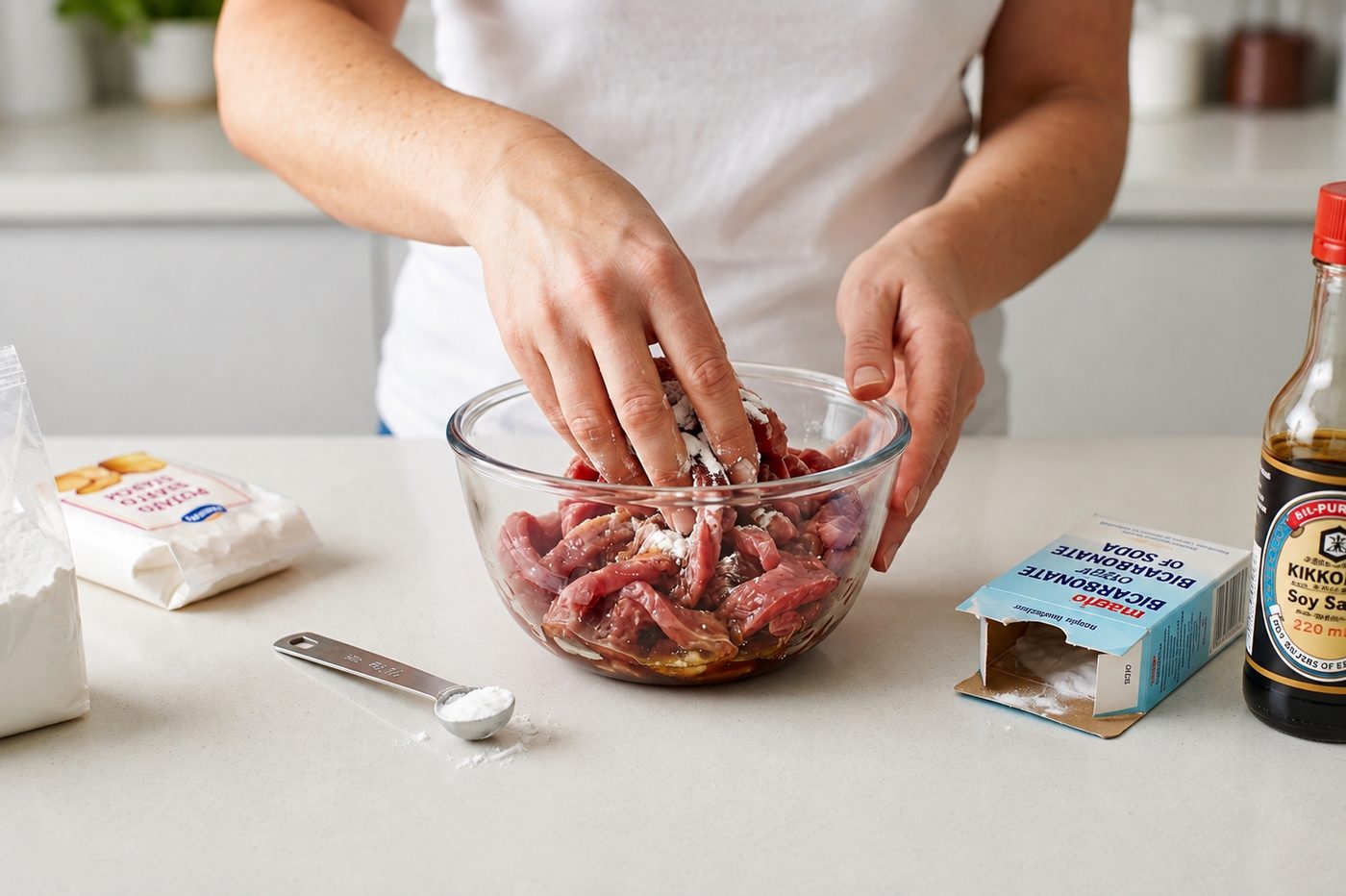
- Velvet the beef: mix the strips with the potato starch, 1 tbsp soy, oil and bicarb. Massage through and leave 10–15 minutes while you prep everything else.
- Mix the sauce in a small bowl and set aside. Slice all the veg so it’s ready — this cooks fast and there’s no time to chop once you start.
- Get a wok or large pan very hot. Add a little oil, spread the beef in one layer, leave 45 seconds, then toss 30–60 seconds. Remove straight away — it doesn’t need to be cooked through.
- Same pan, a little more oil. Carrot and radish for 2 minutes, then a splash of water and cover 30 seconds to soften the carrot without going soggy.
- Add the zucchini for 60–90 seconds, keeping it slightly firm.
- Pour in the sauce, toss 20–30 seconds until glossy, return the beef for a final 30–45 seconds, then off the heat with lemon, sesame oil and sesame seeds.
Why velveting works (the whole trick)
This is the bit worth understanding, because it’s the difference between juicy and shoe leather. Three things matter, in order: slice across the grain (look at which way the muscle fibres run and cut through them, not along them, into thin 3–5 mm strips); the starch-and-bicarb coating (the starch holds moisture and gives that silky restaurant texture, the bicarb gently tenderises); and a screaming-hot pan with a ridiculously short cook. Crowd the pan and the beef steams instead of searing, which is where grey and tough come from — so if you’ve got a lot, sear it in two batches. And always take the beef out before the veg, returning it only at the very end for 30–45 seconds to coat in the sauce.
A few kitchen shortcuts
Slice cold beef. If the beef is soft and slippery, pop it in the freezer for 15–20 minutes first — firm beef slices far more thinly and evenly. Don’t over-bicarb. Half a teaspoon for 400 g is plenty; too much, or leaving it too long, gives the beef a faintly soapy texture. Ten to fifteen minutes is the sweet spot. Grate, don’t chop, the ginger and garlic so they melt into the sauce rather than catching and burning. Prep everything before the pan goes on — this dish is over in about four minutes of actual cooking, and there’s no pausing to slice a zucchini once it’s started.
Make it yours
The starch. Potato starch is my first choice for that silky coat, but cornflour works just as well and arrowroot will do in a pinch (it can go slightly gummy if there’s a lot of sauce, so go a touch lighter). The veg — use whatever’s in the fridge. Carrot, zucchini and radish is just what I had; capsicum, snow peas, green beans, broccoli, bok choy, mushrooms or cabbage all work. The only rule is order: hard, dense veg go in first, soft quick-cooking veg go in last. Keep the total to roughly 400–500 g so the pan stays hot rather than stewing. The base. Steamed rice is classic, but rice noodles are lovely and faster, and cauliflower rice or shredded cabbage works if you want it lighter. The protein. Chicken thigh, pork strips or firm tofu all velvet the same way — leaner cuts like chicken breast benefit from a touch more oil. For a tender cut like scotch fillet, go light on the bicarb or skip it. Love a good beef bowl? The sticky ginger-lime beef bowls are the mince version of this idea.
Can I make it ahead or freeze it?
The velvet-marinated raw beef freezes beautifully — mix the beef with the starch and soy, freeze flat in a bag, and it tenderises as it thaws, so it’s a great thing to prep in bulk on a Sunday. The sauce can be mixed and kept in a jar in the fridge for up to a week. Cooked stir-fry is best fresh since the veg softens on reheating, but leftovers keep a day or two and reheat quickly in a hot pan (not the microwave, which steams the veg limp).
Is it gluten free? Low FODMAP?
Gluten free: yes, as long as you swap the soy sauce for tamari — regular soy contains wheat, tamari doesn’t. Low FODMAP: two swaps. Grated garlic is high FODMAP, so use garlic-infused oil instead — the flavour is oil-soluble so it comes through, but the FODMAPs don’t. Radish and standard mushrooms are worth checking for your own tolerance; carrot, zucchini, capsicum, green beans and the green tops of spring onion are all low-FODMAP safe. Keep the rice or use rice noodles, both fine.
Want your training and your weeknight dinners actually pulling in the same direction? Come and train with me in Coogee.