
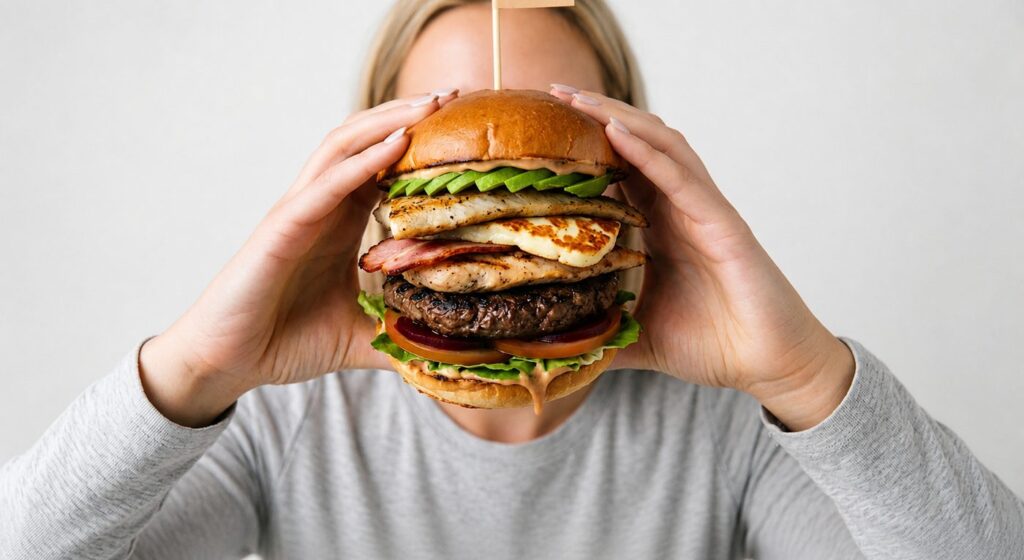
You already know you should eat more protein. Everyone knows. It’s the one piece of nutrition advice that has survived every fad of the last decade.
And yet here you are, at 4pm, having eaten a coffee, a banana and half a toddler’s crust, wondering why you want to eat the pantry.
Knowing isn’t the problem. Doing it on a Tuesday when you’re late and everyone needs something from you — that’s the problem. So let’s fix the doing.
1. You’re probably eating half of what you think
Most women I work with are eating somewhere between 50 and 80 grams a day and are genuinely surprised when we add it up.
Here’s roughly where you want to be: 1.6 to 2.2 grams per kilo of bodyweight if you’re training and want to hold onto muscle. For a 65 kg woman that’s about 105 to 145 grams a day.
That number tends to produce one of two reactions: “that’s impossible” or “that can’t be right”. It’s right, and it’s not impossible — but it does mean protein has to be a decision at every meal, not an accident.
The reality check: add up yesterday. Not today, when you’re paying attention. Yesterday, honestly. That number is your starting line.
2. Breakfast is where it falls apart
This is the single biggest gap I see. Toast. Fruit. Coffee. Maybe oats. Almost no protein — and then people wonder why they’re ravenous by 11 and eating standing up at the fridge by 4.
Most women load nearly all their protein into dinner. Your body handles it far better spread across the day — roughly 25 to 40 grams per meal — because muscle protein synthesis responds to a decent hit of protein, not a trickle.
Fix breakfast and you’ve usually solved half the problem before 8am.
Breakfasts that actually hit 30g:
- 3 eggs + 100g cottage cheese on toast — ~30g
- 200g Greek yoghurt + protein powder stirred through + berries — ~43g
- Leftover dinner (yes, really — this is the most underrated breakfast on earth)
- 2 eggs + 100g smoked salmon + avocado on rye — ~33g
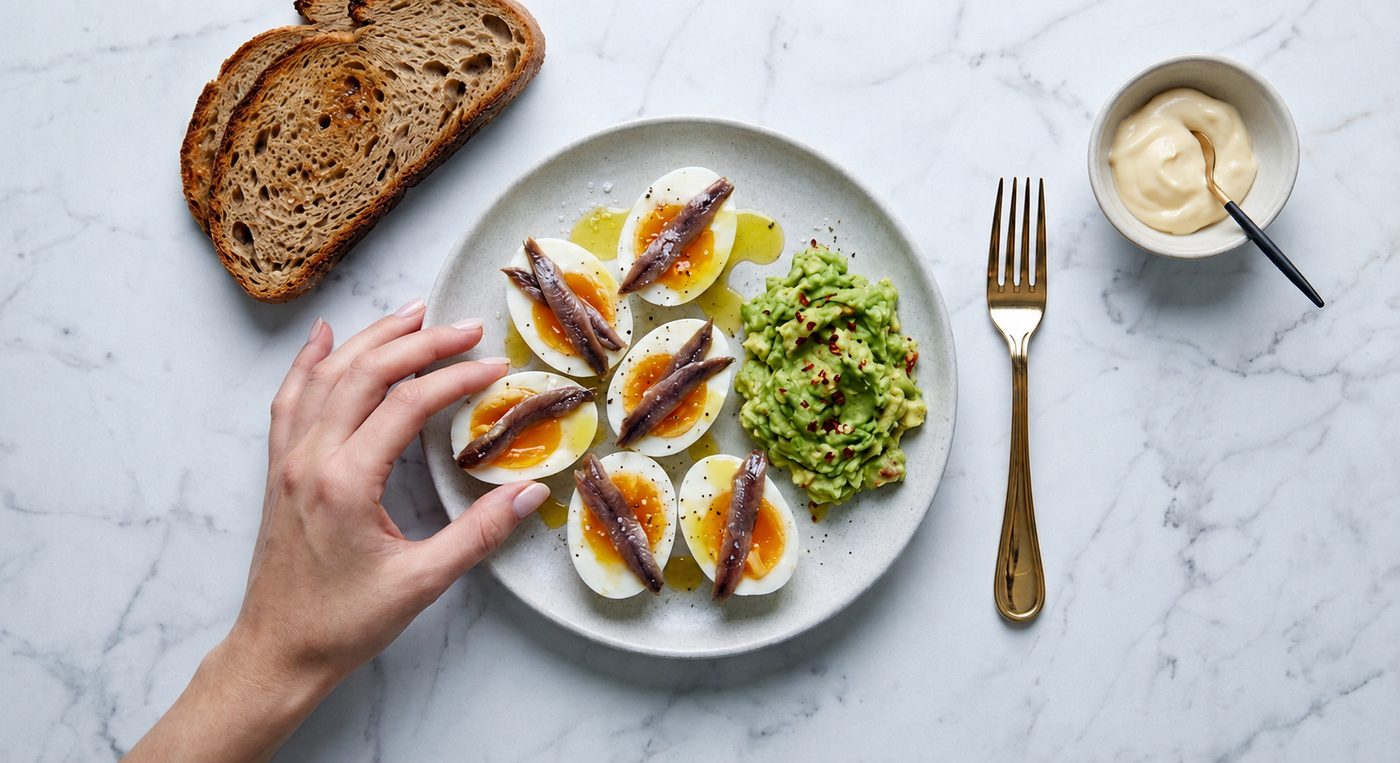
- Tin of mackerel or sardines on toast with lemon and pepper — ~25g
- 2 eggs + 2 slices turkey breast + tomato — ~28g
- 2 eggs + 2 rashers bacon + tomato — ~26g
- Protein smoothie: 30g powder, milk, frozen banana, tablespoon of peanut butter — ~40g
A note on the bacon: it’s fine, and I’m not going to be precious about it. But if bacon is your daily breakfast rather than your weekend one, rotate it with the salmon, mackerel or turkey — you’ll get the omega-3s and considerably less processed meat, for roughly the same protein and about the same effort. Something like the sticky ginger-lime beef bowls reheats into a 35g-protein breakfast without complaint.
Tinned fish deserves a special mention. Mackerel and sardines are the cheapest high-protein food in the supermarket, they need no cooking, they last forever in the cupboard, and they’re loaded with omega-3s. If the smell puts you off, start with tinned salmon — much milder — and work up.
3. Learn a few numbers, ignore the rest
You don’t need an app. You need a rough sense of what’s in things.
| Food | Protein |
|---|---|
| Chicken breast, 150g | ~35 g |
| Beef mince, 150g cooked | ~35 g |
| 3 eggs | ~18 g |
| Greek yoghurt, 200g | ~18 g |
| Cottage cheese, 100g | ~12 g |
| Tin of tuna | ~25 g |
| Tin of mackerel | ~20 g |
| Tin of sardines | ~22 g |
| Smoked salmon, 100g | ~20 g |
| Turkey breast, 100g | ~29 g |
| Scoop of protein powder | ~25 g |
| Firm tofu, 150g | ~21 g |
| Tin of lentils, drained | ~13 g |
Screenshot that. That’s the whole education.
4. The tricks that make it stick
Cook double, always. Every time you cook a protein, cook twice as much. Tomorrow’s problem is now solved and it took you no extra time.
Buy the pre-cooked stuff. BBQ chicken, tinned tuna, tinned salmon, pre-boiled eggs, ready-made bolognese. Purists will tell you to cook from scratch. Purists are not doing school pickup.
Protein first, then the rest. Physically eat the protein on your plate first. It’s a small psychological trick and it works — you fill up on the thing that matters instead of the thing that’s easiest. For a fast one, turkey and cottage cheese on toast takes five minutes.
Keep an emergency drawer. Protein powder, tinned mackerel, sardines or tuna, long-life milk, roasted chickpeas, jerky. The point isn’t that these are perfect. The point is they beat “nothing”.
Put it in things you already eat. Cottage cheese in scrambled eggs. Greek yoghurt instead of sour cream. Lentils into bolognese. Protein powder in porridge. You’re not adding meals, you’re upgrading them.
5. The habit part — where everyone falls over
Here’s the thing nobody says out loud: most people don’t fail at protein because they don’t know what to eat. They fail because they try to change five meals at once, feel like they’re doing homework, and quit by day nine.
So don’t do that.
Week one: change breakfast only. Nothing else. Every other meal stays exactly as it is.
Week two: keep breakfast, add a protein-containing snack — yoghurt, a boiled egg, cheese and crackers with actual cheese.
Week three: look at lunch. Lunch is usually the second disaster — a sandwich, some fruit, a coffee.
Week four: now you’re eating protein three times a day and you didn’t have to think about “hitting macros” once.
One change at a time is not slower. It’s the only speed that survives past a fortnight.
6. Your one-week protein reset
Screenshot this and stick it on the fridge.
Every day this week:
- Protein at breakfast — aim for 30g
- Cook double at dinner
- One protein snack in the afternoon
- Emergency drawer stocked
Once this week:
- Boil six eggs on Sunday
- Buy one BBQ chicken
- Add up one day honestly, so you know your starting point
That’s it. No tracking app, no weighing, no spreadsheet.
The honest bit
You will not do this perfectly. There will be days that are a coffee and a handful of your kid’s crackers, and that’s genuinely fine — the aim isn’t a perfect week, it’s a better average.
But get breakfast right most days and you’ll notice things within a fortnight. Fewer 4pm collapses. Less grazing after dinner. Better recovery from training. Fewer of those late-afternoon decisions that feel like willpower failures but are actually just low blood sugar and a body asking for something it hasn’t had all day.
It’s not willpower. It’s breakfast.
Want a hand working out what this looks like for your body, your training and your very real schedule? Book a session and we’ll sort it properly.